

Why ASCs Are Turning to Agentic AI for Surgical Coding
Ambulatory surgery centers are quietly adopting agentic AI for surgical coding and billing. Here’s what that network-level shift means for accuracy and audit risk.
·
Ambulatory surgery centers are quietly adopting agentic AI for surgical coding and billing. Here’s what that network-level shift means for accuracy and audit risk.
·

AKASA says its autonomous coding platform now covers 10% of US inpatient discharges nationwide. Here’s what that kind of scale means for HIM and compliance teams evaluating it.
·

Savista and Minset’s partnership reached 93% autonomous medical coding in radiology with 100% audited accuracy. What that figure actually measures matters.
·

CMS’s preliminary CY2027 lab fee cuts average 16%. Precise HCPCS coding is becoming the clearest lever labs and health systems have to protect shrinking margins.
·
Tandem Health’s $100M raise came with Class IIa medical device certification for its AI coding tool — a compliance signal US health systems should watch.
·

The AMA named DiMe founder Jennifer Goldsack to lead its new AI center. Coders and compliance teams should watch whether her mandate touches CPT policy.
·

CMS wants to code AI-driven lab analyses as ‘Software as a Medical Service’ instead of standard lab tests. Nearly every major pathology group opposes it.
·

Waystar’s Aug. 26 AltitudeAI launch bundles denial resolution and documentation review agents — here’s what it signals for medical coding teams.
·
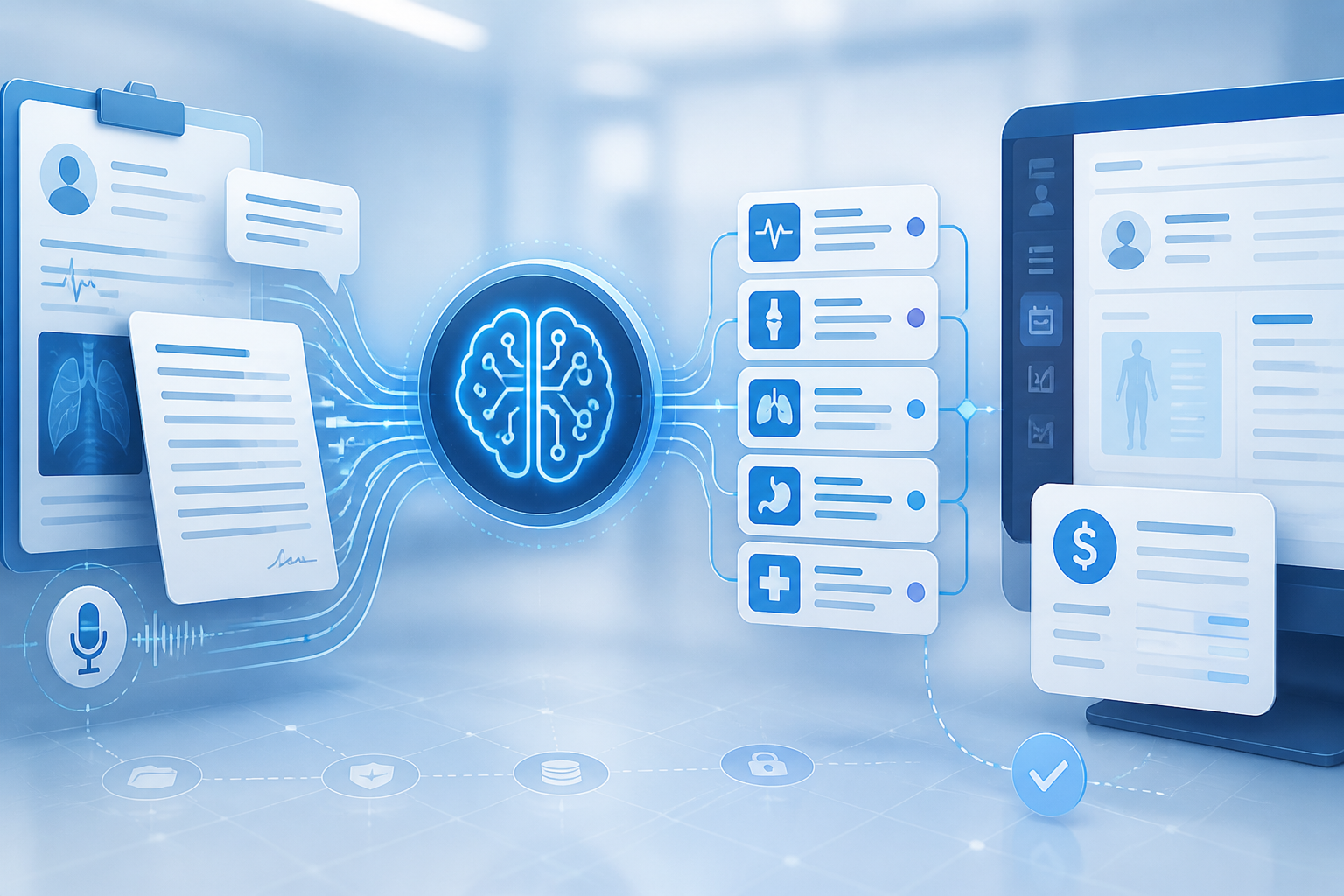
Oracle Health’s Clinical AI Agent now suggests professional fee codes at the point of care — a sign coding AI is moving inside the EHR itself.
·

XiFin’s Series B investment in Notable Systems replaces OCR-based document intake with agentic AI. Here’s what that shift means for coders and denial-prone claims heading into 2027.
·